Views: 0 Author: Site Editor Publish Time: 2026-02-25 Origin: Site


You should learn about these 10 important types of marine rigging hardware: shackles, blocks, winches, cleats, turnbuckles, wire rope slings, safety harnesses, rigging gloves, tool bags, and boat tools. Choosing the right marine rigging hardware and maintaining it properly helps keep sailors safe and makes sailing easier. Each piece of marine rigging hardware provides unique support for your boat.
Learn about important marine rigging hardware like shackles, blocks, and winches. Each type has a special job to keep your boat safe and moving well.
Check your rigging hardware often for damage or wear. Doing this helps stop accidents and keeps your equipment working well.
Use the correct tools and safety gear, like safety harnesses and rigging gloves. These things keep you safe when you work on your sail and make sailing better.
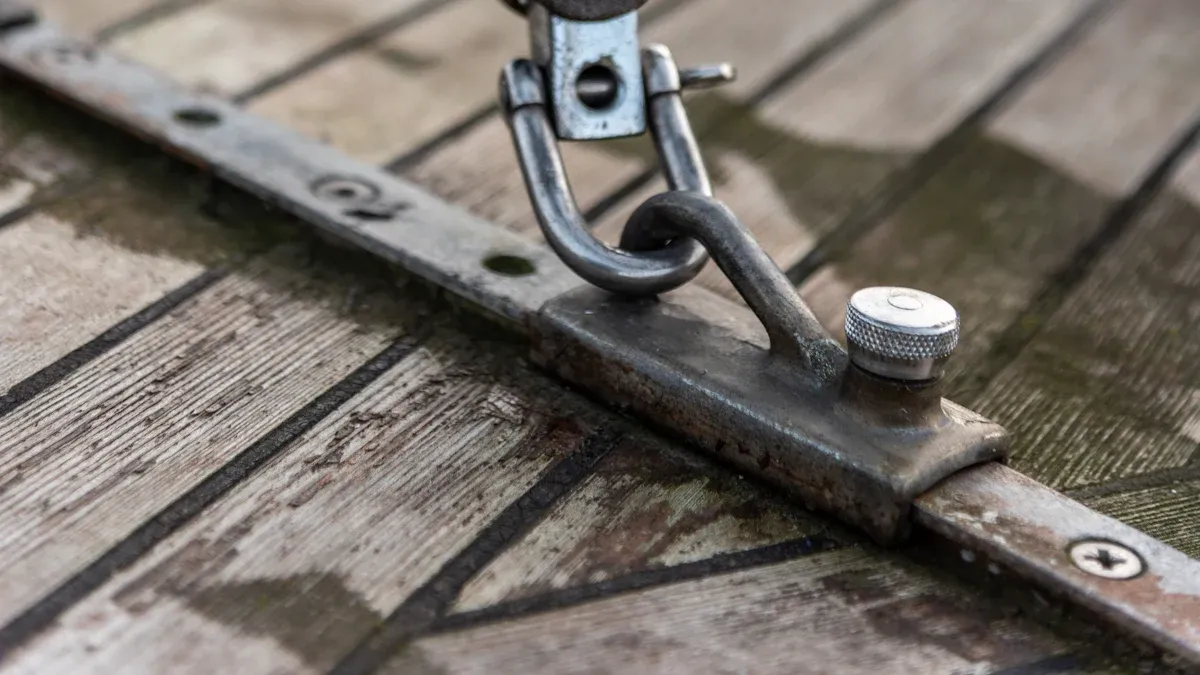
You will find shackles everywhere in marine rigging. Shackles connect different pieces of equipment and lines on your boat. They come in many shapes and sizes. You can choose from bow shackles, D shackles, and even soft shackles made from dyneema. Each type serves a special purpose in rigging. Shackles often use strong metals, but dyneema shackles give you a lightweight option for some equipment.
You use shackles to join chains, ropes, or wire rope slings to other equipment. Shackles make it easy to attach or remove parts of your rigging. You should always check the working load limit before using a shackle. This helps you avoid overloading and keeps your rigging safe. Always align the load properly in the shackle. If you use the wrong size or type, you risk damaging your equipment. Many sailors forget to inspect shackles for wear or corrosion. You should check them often to keep your rigging strong.
Tip: Thread the shackle pin downward. This prevents it from loosening while your boat moves.
Shackles play a key role in keeping your rigging secure. They ensure proper connections and help handle heavy loads. Regular inspection of shackles helps you spot damage early. You should always choose the right shackle for each job. This boosts safety and performance for all your equipment. Shackles also prevent shock loading, which can happen quickly on the water. When you use shackles correctly, you protect your rigging and your crew.
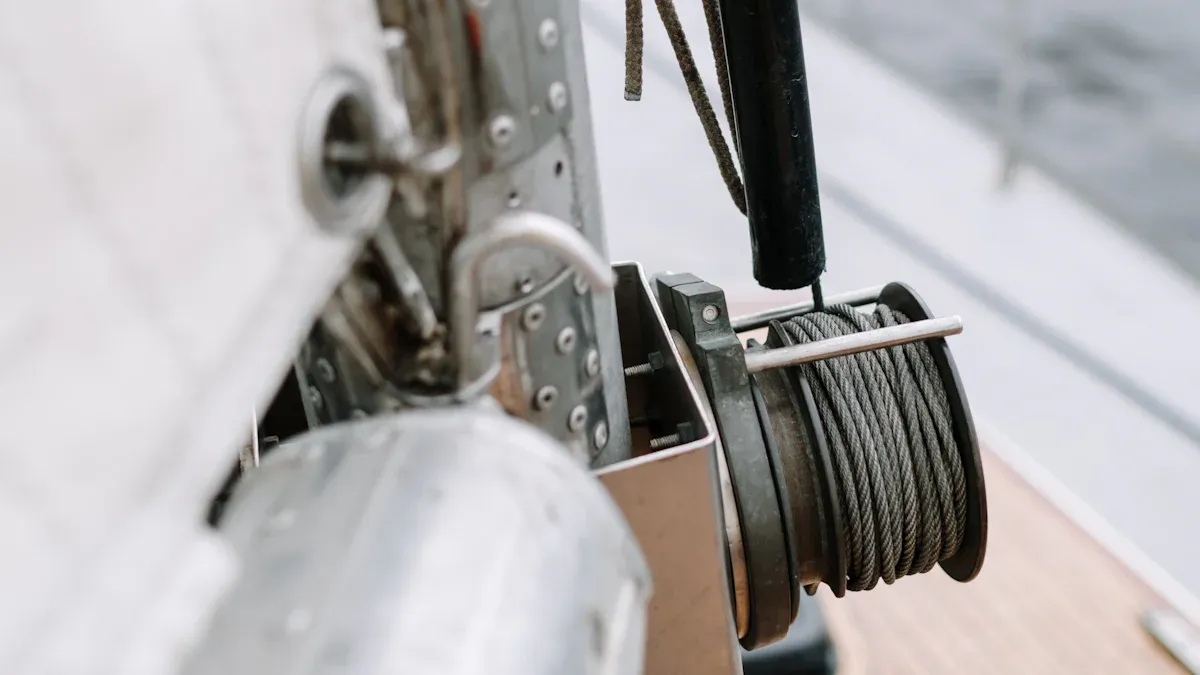
Blocks help you control lines on your boat. You use blocks to change the direction of a line or to gain a mechanical advantage. Blocks have a wheel inside called a sheave. This wheel lets the line move smoothly. You often see blocks in many parts of rigging. Some blocks, like snatch blocks, open up so you can fit a line without threading it through. Others, called pulley blocks, stay closed. The table below shows the main differences:
Feature | Pulley Block | Snatch Block |
|---|---|---|
Design | Always closed; requires threading the line through | Designed to open with a gate for easy line fitting |
Functionality | Directs the rope while loaded; multiplies lines for lifting | Similar functionality but allows for easier rigging |
Common Uses | Used in various lifting tasks, often based on user preference | Interchangeable with pulley blocks; used in similar tasks |
Pulleys are simple machines that help you lift or move heavy loads. In rigging, pulleys work with blocks to make jobs easier. You can use one pulley, or you can use several together. When you use more than one, you create a block and tackle system. This system gives you more power with less effort. Pulleys guide lines and help you control sails and other parts of your rigging.
You use blocks and pulleys in many rigging tasks. They help you manage and redirect lines under load. This reduces the effort you need to adjust sails and rigging. Here are some ways blocks and pulleys make your work easier:
You can lift sails with less force.
You can adjust rigging quickly and safely.
You can use advanced blocks that reduce friction for smooth operation.
Recent improvements in block and pulley technology give you lighter and stronger gear. These changes make your rigging more efficient and help your boat perform better. You should check your blocks and pulleys often to keep your rigging safe and reliable.
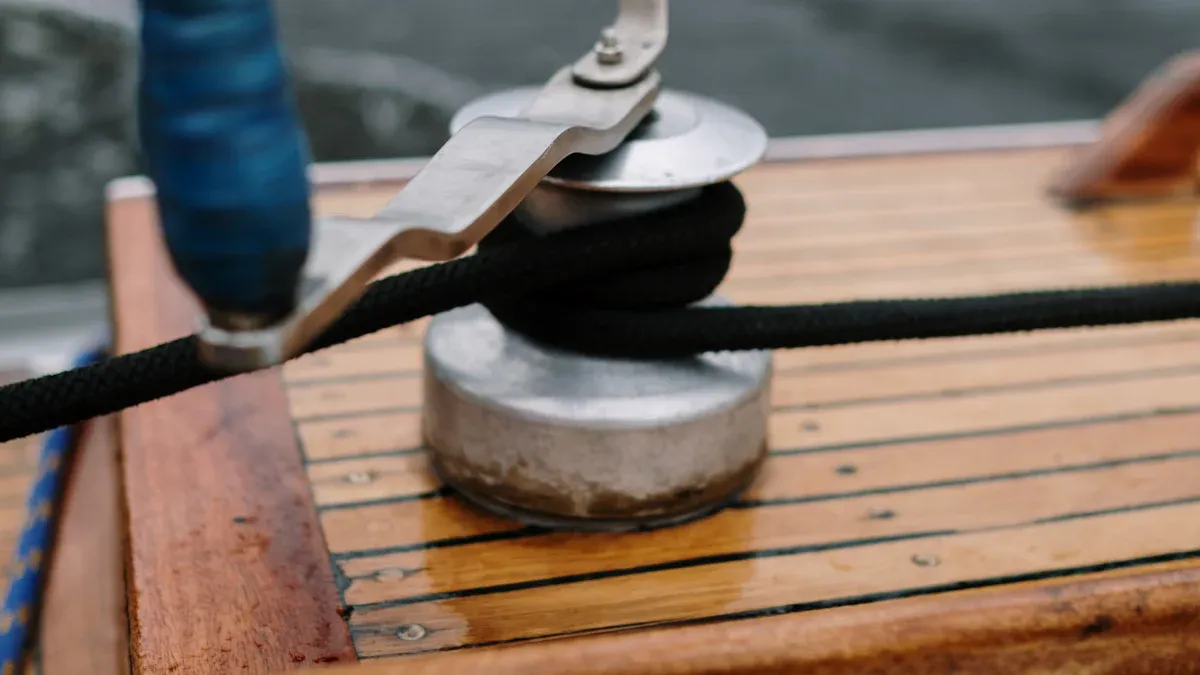
Winches help you control sails and running rigging. They make it easier to trim sails and move the jib. You do not need as much strength when using winches. Many sailors use winches for better sailing and less tiredness. This is very helpful with big sails or a self-tacking jib. Each brand of winch has special features. The table below lists some top winch brands and what makes them different:
Brand | Distinguishing Features |
|---|---|
Andersen | Direct drive high gear for fast line retrieval, polished stainless steel drum with low abrasion. |
Lewmar | Redesigned for efficiency, easy to service, ranks high in performance. |
Harken | Known for its bearing-packed mechanism, but has abrasive drum surfaces. |
Antal | Offers small winches, but some models were not available for testing. |
Barton | New-tech options available, suitable for smaller applications. |
Setamar | Unique design with low line wear, but complicated to clean and expensive. |
Winches help you trim sails and move the jib. They also help you adjust running rigging. You can use winches in any weather. In strong winds, winches give you more power to handle heavy sails. You can use blocks with winches to make things even easier. This helps you keep your sails under control. You can move the self-tacking jib quickly. This makes sailing smoother. Winches help you set up endurance series sails for long trips. When you use winches the right way, you sail better and get less tired. Winches let you control sails, running rigging, and the jib with less work. This keeps your sailing strong.
You must use winches safely to stay safe. Always wrap the line around the drum enough times. This stops the line from slipping. It also helps prevent accidents. Take care of your winches to keep them working well. Here are some tips:
Use OEM parts to keep your winch strong.
Write down your maintenance so you can find problems early.
Service your winches at least once each season.
Check fluid levels and seals every week.
Test pressure relief valves and clean breathers every month.
Change filters and check fluid samples every year.
Learn how your winch works and keep the right tools on your boat.
Tip: Knowing your winch and checking it often helps you avoid trouble. This keeps your running rigging, sails, and jib working well for every trip.
Cleats play a key role in sailing. You use cleats to secure lines and keep your sail in place. Every time you dock or adjust a sail, you rely on cleats. These devices come in many shapes and sizes. You find them on almost every part of a sailboat. Cleats help you control your sail and keep your boat safe during sailing. You need to know how to use cleats for smooth sailing and strong rigging.
You see different cleats for different boats and sailing needs. The table below shows common cleat types, materials, and their uses:
Type of Boat | Recommended Cleat | Material | Application Description |
|---|---|---|---|
Small Fishing Boats | Horn or flip-up cleats | Nylon or aluminum | Suitable for light-duty docking, easy to handle, and corrosion-free in freshwater. |
Pontoon Boats | Flip-up or pop-up cleats | Aluminum or stainless steel | Ideal for recreational docking, tucks away when not in use, and suitable for calm marinas. |
Sailboats | Pop-up cleats or Samson posts | Good quality stainless steel | Provides reliability under tension from wind and waves, effective for docking and rigging. |
Power Boats | Ski tow cleats or pop-up cleats | Stainless steel | Dual purpose for towing and docking, ensures strong attachment in wet environments. |
Yacht | Pop-up or flush-mount cleats | Premium-grade stainless steel | Combines performance and style, designed for durability in marine conditions. |
Dock Installations | Large horn cleat | Galvanized steel | Strong tie-downs for continuous use, suitable for various types of boats at docks. |
You choose the right cleat based on your sail and rigging needs. Stainless steel cleats work best for most sailing conditions. Nylon cleats suit small boats and light sails.
You must secure lines to keep your sail steady and your boat safe. Learning to tie a cleat hitch helps you manage your sail and rigging. Follow these steps for a strong hold:
Make a loop around the base of the cleat.
Wrap the line in a figure-eight pattern over the horns.
Finish with a hitch to lock the line in place.
Tip: Take extra wraps around the base for more grip. This prevents line slippage and keeps your sail secure during sailing.
Proper cleating lets you adjust or release your sail quickly. You keep control of your boat in all sailing conditions. Good cleat skills protect your rigging and make every sailing trip safer.
Turnbuckles help you change the tightness of standing rigging. They connect wires and rods that hold up your sail and mast. Turnbuckles are made from galvanized steel or stainless steel. Stainless steel does not rust as easily as galvanized steel. This makes it better for use on boats. The material you pick changes how long turnbuckles last. You want strong turnbuckles for your standing rigging.
Galvanized steel turnbuckles give basic protection.
Stainless steel turnbuckles resist rust much better.
The material you choose affects how long they last.
You need to check turnbuckles often. Take them off if you see missing or worn labels, bent or cracked parts, bad threads, or a lot of rust. Change turnbuckles if they are worn by 10% or more. Only use turnbuckles that are OEM certified, steel forged, and marked with WLL. Do not side-load, weld, or change turnbuckles. Make sure the threads are engaged at least 1.5 times the diameter.
Turnbuckles let you adjust tension in standing rigging. You twist the body to pull the ends together or push them apart. This makes the assembly shorter or longer. You do not have to take anything apart. You can easily control the tension in your sail and mast. Turnbuckles help you fine-tune your standing rigging for better sailing.
Tip: Write down your inspections of slings and rigging hardware every 12 months. Check more often, like every month or three months, if conditions are harsh.
Turnbuckles are important for holding up the mast. You use them to keep the mast straight and steady. Standing rigging needs turnbuckles for strength and balance. You adjust the tightness to fit your sail and boat. Synthetic standing rigging also uses turnbuckles to hold the mast. This keeps your sail safe and your boat ready for trips. Turnbuckles help you keep your standing rigging strong and your mast well supported.
You use wire rope slings when you need to lift or secure heavy equipment on your sail. These slings give you the strength you need for tough jobs. You find them made from high-quality materials that stand up to harsh marine conditions. When you work on a sail, you want gear that will not let you down. Wire rope slings help you move anchors, engines, and other heavy items safely. You can trust them for many lifting tasks on your sail.
Wire rope slings play a big part in safe lifting and securing on your sail. Their strong design lets you handle heavy loads without worry. You can use different sling shapes to fit your needs. Some slings wrap around objects, while others connect to hooks or shackles. This versatility helps you balance and control loads on your sail. You keep your equipment steady and safe, even in rough weather. When you use wire rope slings, you protect your sail and your crew.
You want your wire rope slings to last a long time. Their durability comes from strong wires and careful construction. You should check your slings often for signs of damage. Problems like broken wires, kinks, or rust can make a sling unsafe for your sail. Use this table to learn about common failures and how to prevent them:
Type of Failure | Description | Preventive Measures |
|---|---|---|
Wire Breakage | Fatigue, wear, or overload can break wires. | Replace broken sections or the whole rope. |
Deformation | Kinks or flat spots weaken the sling. | Inspect and replace deformed ropes; choose the right size. |
Corrosion | Rust from water or salt weakens the sling. | Clean, maintain, and use anti-corrosion products. |
Slipping and Knotting | Loss of grip or knots can cause accidents. | Use tools to fix slipped or tangled sections. |
Wear | Rubbing reduces strength and size. | Inspect and replace worn ropes. |
Twisting | Uneven stress can twist or untwist the sling. | Check and fix twisted ropes often. |
Tip: Always inspect your wire rope slings before you use them on your sail. Replace any sling that shows damage. This keeps your sail safe and your lifting jobs secure.
You need a safety harness when you work on your sail. This harness keeps you attached to your boat. It wraps around your body and connects to a secure point. You use a harness when you move on deck, adjust your sail, or check your rigging. A good harness fits well and does not slip. You can wear it over your clothes or foul weather gear. You should always check the harness for damage before you use it. A harness helps you stay safe when you work on your sail in rough weather.
The table below shows important safety standards for harnesses:
Evidence | Explanation |
|---|---|
EN361 standard | This standard outlines the design and safety requirements for full body harnesses, ensuring they are effective in preventing falls. |
Proper attachment to secure anchor points | Ensures that the harness functions correctly, significantly reducing the risk of falling overboard. |
Contribution to safety | While not standalone devices, harnesses enhance safety by preventing falls and should be used with life-saving equipment. |
You use a harness to stay safe when you work on your sail and rigging. The harness keeps you from falling overboard. You attach the harness to a strong point on your boat. This lets you move and work on your sail without fear. You can climb the mast, fix your sail, or check your rigging with more confidence. You protect yourself and your crew when you use a harness.
In 2006, an 18-year-old crew member fell to his death on a schooner because he was not wearing a harness. This incident highlights the potential dangers associated with the absence of safety harnesses in offshore sailing.
Many sailors now follow harness and PFD rules. These rules help save lives during sail trips.
The adoption of harness and PFD rules similar to those mandated by U.S. SAILING is recommended for all sailors.
Statistics indicate that these regulations are effective in saving lives.
You should always wear your harness when you work on your sail in rough weather or at night. Attach your harness to a secure point before you start. Check the straps and buckles for wear. Make sure the harness fits snugly. Do not use a harness with broken parts. Practice clipping and unclipping your harness before you sail. You can move safely on deck and focus on your sail and rigging. Teach your crew how to use a harness. This keeps everyone safe when you work on your sail.
Tip: Always use your harness with a life jacket for the best protection during sail trips.
You need rigging gloves every time you work with a sail. These gloves protect your hands when you handle lines, adjust your sail, or move equipment on your boat. Good gloves help you avoid cuts and blisters. You can find gloves with special features for tough jobs. Some gloves have silicon knuckle protection. Others use palm padding and inside lining to guard against sharp edges. Many gloves use Kevlar stitching for extra strength. A heat-resistant wrist guard keeps the glove secure but lets you remove it quickly if needed.
Silicon knuckle protection shields your fingers from injury.
Palm padding reinforces the areas that wear out fast.
Inside lining protects your hands from cuts.
Kevlar stitching gives the glove more strength.
Heat-resistant wrist guard helps you take off the glove fast.
You use rigging gloves to keep your hands safe during sail work. Handling ropes and adjusting your sail can cause blisters, calluses, and cuts. Gloves act as a barrier between your skin and rough lines. They also help you grip wet ropes, which is important for safe sail handling. When you wear gloves, you can work longer without pain. You also stay warm in cold weather. This makes every sail trip safer and more comfortable.
Gloves protect against cuts, blisters, and calluses.
They help you grip wet ropes during sail adjustments.
Gloves add warmth for cold weather sail trips.
You want gloves that feel good and help you hold your sail lines. High-quality gloves use a full Duraclad palm for durability. The back of the glove uses breathable nylon for comfort. Some gloves have impact protection to keep your hands safe. A reinforced thumb saddle adds strength where you need it most. Rope channel reinforcement helps the glove last longer during tough sail jobs. Many gloves use a leather exterior for abrasion resistance. Some even have a touch-screen fingertip so you can use devices without taking off your gloves.
Full Duraclad palm increases glove life.
Breathable nylon back keeps your hands cool.
Impact protection and reinforced thumb saddle add safety.
Rope channel reinforcement supports long-term sail use.
Leather exterior resists wear from sail lines.
Touch-screen fingertip lets you use devices on your boat.
Tip: Always check your gloves for wear before each sail. Replace them if you see holes or weak spots. This keeps your hands safe for every rigging job.
You need a strong tool bag to keep your sail gear ready for action. A good bag protects your boat tools from water and salt. Choose a bag with many pockets so you can find what you need fast. You want a bag that stands up to rough use on your sail. Many sailors pick a bag with a hard bottom to keep tools dry. Your rigging stays safe when you store your boat tools the right way.
You should pack your boat maintenance kit with essential tools for every sail. These tools help you fix problems quickly. Always include a rigging knife. This knife lets you cut lines or webbing in an emergency. You also need a multi-tool, headlamp, tape, line, string, cable ties, pliers, and screwdrivers. Add a socket and wrench set, spare bulbs, fuses, belts, and thread locking fluid. High-quality boat tools make repairs easier and safer. Here is a table of basic boat tools you should carry:
Tools | Description |
|---|---|
Socket Set, 3/8” Drive SAE | 3/8 thru 13/16” |
Socket Set, 3/8” Drive Metric | 10 thru 17mm |
Flex T-Handle, 3/8” Drive | For tight spaces |
Ratchet Wrench, 3/8” Drive | Quick turning |
Extension Bars, 3/8” Drive | 3”, 6”, 10” |
Combination Wrenches, SAE | 1/4” thru 7/8” |
Philips Screwdrivers | #0, #1, #2, #3 & Stubby |
Adjustable Wrenches | 6, 8, & 12 inches |
You keep your sail safe when you organize your boat tools. Use small bags or boxes for screws and spare parts. Label each pocket in your tool bag. Store your rigging knife in an easy-to-reach spot. Check your boat tools before every sail. Replace broken or missing items right away. Well-organized tools help you handle any rigging problem fast. You stay ready for every sailing trip.
Tip: Practice using your rigging knife and other essential tools before you need them in an emergency.
It is important to know the main types of marine rigging hardware before you sail. This list helps you check your gear and get ready for your trip. Each piece of hardware has a special job. These items help you control your sail, keep your hands safe, and organize your tools. The table below shows how each hardware type works with your sail.
Look at this table when you get your sail ready for a trip. It tells you how each piece of marine rigging hardware helps you work safely and easily.
Marine Rigging Hardware Type | Main Function for Sail |
|---|---|
Shackles | Connect lines and secure sail parts |
Blocks & Pulleys | Change direction and ease movement of sail lines |
Winches | Add power to adjust heavy sail loads |
Cleats | Hold and secure sail lines in place |
Turnbuckles | Adjust tension in standing sail rigging |
Wire Rope Slings | Lift and secure heavy sail equipment |
Safety Harnesses | Keep you safe while working on your sail |
Rigging Gloves | Protect your hands during sail work |
Rigging Tool Bag & Boat Tools | Organize and carry tools for sail maintenance |
Rigging Knife | Cut sail lines quickly in emergencies |
You should look at this marine rigging hardware table before every sail. This helps you find missing or broken hardware. You keep your sail strong and your crew ready for anything. Knowing about marine rigging hardware makes sailing safer and more fun.
When you learn how to use each rigging hardware, you feel more confident on your sail. Try out every tool on your boat to get better. Each time you sail, you get safer and have more control. Keep learning about your sail gear. You can also share your tips or ask questions below.
Good handling skills help you steer the boat well and control its speed. This makes sailing safer and more fun, even if the weather changes during your trip.
You should always check your rigging before every trip. This helps you spot problems early and keeps you and your crew safe.
You should inspect your boat’s hardware every month. Look for signs of wear, rust, or damage. Replace any weak parts right away.
You should use rigging gloves for better grip and protection. Regular gloves may not protect your hands from rope burns or sharp edges.


