Views: 0 Author: Site Editor Publish Time: 2026-03-24 Origin: Site


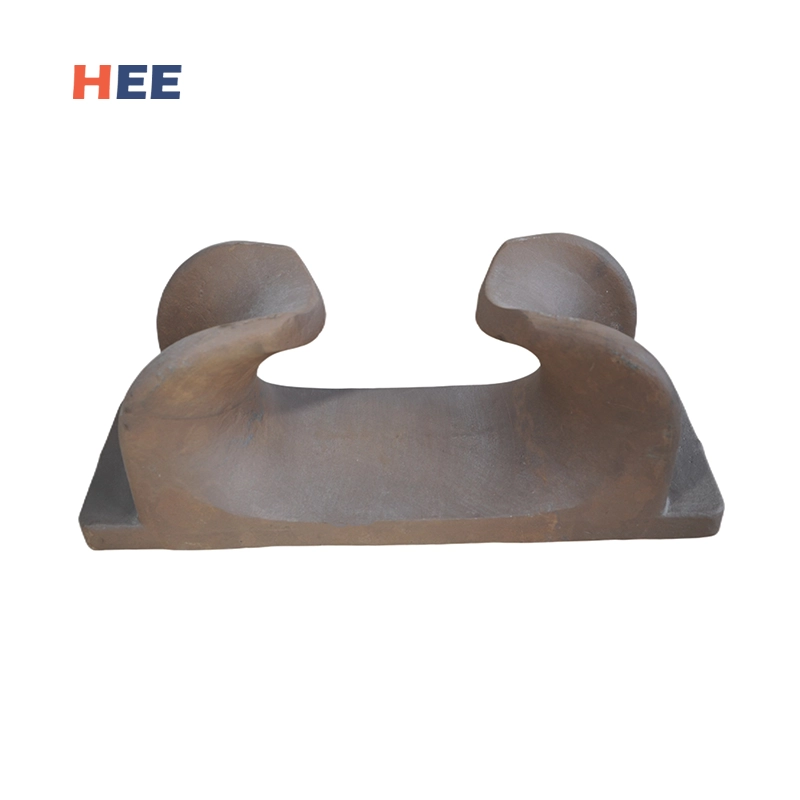
Choosing the right marine chock is not a minor deck-fitting decision. In real mooring operations, the chock affects how the line is guided, how much friction is generated, how safely the load is transferred, and how smoothly the vessel can be berthed or secured. Chocks are core line-handling fittings used to guide mooring and towing ropes from inboard to outboard, and different chock types are designed for different operating priorities. Your own site already notes that open, closed, Panama, and roller types each serve different roles in line handling and vessel safety.
For buyers, shipyards, and marine contractors, the problem is that these products can look similar in a catalog while performing quite differently in use. An open chock, a Panama chock, and a roller chock all guide mooring lines, but they are not chosen for the same situations. The right selection depends on line movement, berth arrangement, vessel size, rope wear considerations, and whether the project has to meet specific standards such as Panama Canal-related or ISO/JIS/DIN requirements.
In this guide, we will compare the three chock types from a practical selection perspective and explain how buyers can choose the more suitable option for their project.
A chock is more than a metal opening on deck or bulwark. It controls the path of the mooring line and influences how the line behaves under load. If the line is poorly guided, friction can increase, wear can accelerate, and the line may not lead cleanly to the bollard, bitt, or winch. In demanding berthing conditions, the wrong chock type can make handling less efficient and increase stress on both the rope and the deck arrangement.
That is why chock selection should begin with operating conditions rather than product appearance. Buyers should ask where the line enters or exits, whether the line angle changes during use, whether the vessel may face dynamic movement at berth, and whether the specification calls for a standard chock form such as a Panama chock.
An open chock is a marine line-guiding fitting with an open throat design that allows mooring ropes to pass through more freely than a closed-form chock. In practice, buyers often use open chocks where line handling convenience and easier lead-in/lead-out are important. Your existing content already groups open chocks among the standard shipboard chock types used to guide and secure lines, and suppliers commonly distinguish them from more enclosed or canal-specific designs.
Because of its more open geometry, this type can be practical where the line path is less constrained or where the operator wants easier handling during mooring operations. However, the more open shape also means buyers should pay close attention to whether the expected lead angle and rope behavior are suitable for that design.
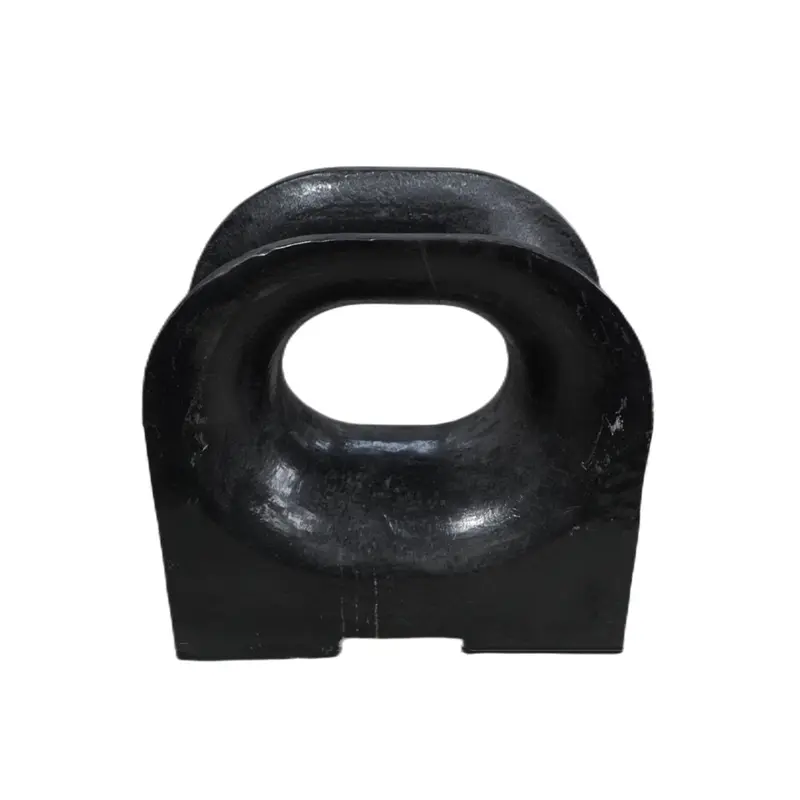
A Panama chock is a specialized mooring fitting designed for safe line handling on large ships and for compliance with Panama Canal-related requirements. ISO identifies Panama chocks under ISO 13728, and the standard states that these chocks are intended for ships passing through the Panama Canal locks, where vessels are commonly assisted by locomotives using steel towing wires and by tug boats. Your website also offers Panama chock products for ocean-engineering and ship applications.
In buying terms, this means a Panama chock is not just a generic alternative to any other chock. It is usually selected when the vessel type, route, or project specification requires canal-compatible mooring/towing arrangements or when the buyer is working from ISO/JIS/DIN-based deck-equipment requirements. Suppliers also commonly distinguish deck-mounted and bulwark-mounted Panama chocks within these standards.

A roller chock incorporates one or more rollers to help the mooring line move more smoothly and reduce friction during line handling. Multiple marine-equipment sources describe roller chocks as fittings that reduce rope abrasion and allow smoother movement, especially where lines are long, heavily loaded, or subject to movement during berthing. Your own product catalog also includes single-roller chock and roller fairlead style products, showing that this friction-control function is already part of your product offering.
This makes roller chocks particularly useful where the line angle changes during operation or where tidal, wave, or berth movement causes the line to work against the fitting. In those situations, the roller helps the line move with less rubbing than a fixed-surface chock.
| Chock Type | Main Design Feature | Main Advantage | Typical Selection Priority |
|---|---|---|---|
| Open Chock | Open throat / easier rope lead | Easier line passage and handling convenience | General mooring guidance where open access is useful |
| Panama Chock | Canal-oriented enclosed chock form built to defined standards | Standardized heavy-duty line guidance for canal and large-vessel applications | Panama Canal or standard-driven projects |
| Roller Chock | Integrated rollers | Lower friction and reduced rope wear during movement | Dynamic rope handling and friction control |
The practical difference is not simply shape. It is how the chock manages the rope under real operating conditions. Open chocks emphasize handling openness, Panama chocks emphasize standard-driven secure guidance, and roller chocks emphasize smoother rope travel and reduced abrasion.
The biggest operational difference among these three options is how they manage rope contact.
An open chock usually gives the operator a simpler and more open lead path, but the rope still bears on a fixed surface. A Panama chock also guides the line through a defined opening, usually with a more controlled enclosed geometry intended for heavy-duty and standard-based use. A roller chock, by contrast, is specifically intended to reduce friction by allowing the rope to move over rollers rather than only over a fixed steel contact surface. Suppliers and technical references consistently describe roller chocks as suitable where rope wear reduction and smoother movement matter.
That said, buyers should not assume that “roller” is always better in every situation. Rope type, lead angle, line movement, and berth condition all matter. Even rope manufacturers note that the choice between closed and roller-style rope-contact fittings depends on the rope behavior and application, not just on the idea that moving parts automatically solve all wear problems.
The best chock type depends heavily on how the vessel moors and where the line runs.
| Operating Condition | More Suitable Choice in Many Cases | Why |
|---|---|---|
| General-purpose mooring with straightforward rope lead | Open Chock | Simple rope guidance and easier handling |
| Projects with Panama Canal or standard-specific requirements | Panama Chock | Matches canal / standard-driven fitting requirements |
| Mooring lines with more movement, angle change, or abrasion concern | Roller Chock | Helps reduce friction and smoother line travel |
| Large commercial vessel with spec-defined mooring arrangement | Panama Chock | Often selected by design requirement rather than preference |
| Berth conditions with dynamic loading or line movement | Roller Chock | Better for managing rope travel under changing conditions |
In other words, buyers should choose by operating condition first and catalog name second. A Panama chock may be the right answer because the project requires it. A roller chock may be the right answer because the rope path moves and friction is a serious concern. An open chock may be the most practical solution where line handling is straightforward and the simpler open geometry works well.
For marine deck fittings, standards matter because project specifications often define not only size but also form, mounting method, and expected working conditions. For Panama chocks, the most important reference is ISO 13728, which specifically covers Panama chocks for ships using the Panama Canal. Market references also show buyers commonly comparing ISO, JIS, DIN, and NS standards when selecting mooring chocks, especially for vessels built to different regional or class expectations.
Before ordering, buyers should check:
whether the project specification names a required standard
whether the chock is deck-mounted or bulwark-mounted
the safe working load or required rope/towing-wire condition
rope size and line type
installation position and lead angle
material and corrosion-protection requirements
class or owner approval expectations where applicable
This is especially important for Panama chocks, because canal-related compliance and standard conformity can be a true project requirement rather than a preference.
One common mistake is choosing by appearance alone. Chocks that look similar in photos may behave quite differently with moving mooring lines. Another is ignoring the actual rope path. A fitting that works on a straightforward lead may perform poorly where the line changes direction or works under movement.
A third mistake is confusing a roller chock with a roller fairlead or assuming they are fully interchangeable. Industry references regularly separate chocks from fairleads because, although both guide lines, fairleads are more specifically associated with line redirection and friction reduction, while chocks are still distinct mooring fittings with their own design roles. Since your own site carries both chock and roller fairlead related products, this distinction is especially worth making clear in your content.
A fourth mistake is failing to check standards. If a vessel or owner specification calls for Panama chocks or a certain standard family, selecting a general open chock simply because it is cheaper can create compliance or design problems later.
The best way to choose between an open chock, Panama chock, and roller chock is to start with the actual mooring scenario:
Is the line path simple or dynamic?
Is friction reduction a major concern?
Does the project specification call for Panama-compliant fittings?
Will the vessel face canal transit, heavy-duty towing, or dynamic berth movement?
Is the mounting position on deck or bulwark?
If the project is standard-driven or canal-related, the answer often points toward a Panama chock. If rope motion and wear are the bigger concern, a roller chock is often more suitable. If the line lead is straightforward and the buyer wants a practical general-purpose fitting, an open chock may be the better choice.
When comparing open chock vs Panama chock vs roller chock, the right choice is not about which fitting is “best” in general. It is about which one best matches the rope behavior, berth condition, vessel requirement, and specification environment of the project. Chocks are essential mooring fittings, and their role in line guidance, friction control, and safe operation should not be treated as a minor detail.
For buyers, a better selection process starts with three questions:
What is the line doing? What standard does the project require? What operating condition creates the most risk?
Once those are clear, it becomes much easier to decide whether an open chock, Panama chock, or roller chock is the more suitable solution.
As a manufacturer focused on marine deck fittings and lifting equipment, Changshu HaiChuan Engineering & Equipment Co., Ltd. (HEE) supplies products including marine hatches, doors, kevels, bitts, chocks, cargo blocks, sheaves, rigging, and low profile winches for shipbuilding, port, and related marine engineering applications. The company presents itself as a long-established manufacturer of marine deck outfittings with its own factory support, quality-focused production, and customization capabilities for standard products and new designs. If you are selecting open chocks, Panama chocks, roller chocks, or other mooring fittings for a vessel or project, you are welcome to contact our team for further discussion.


